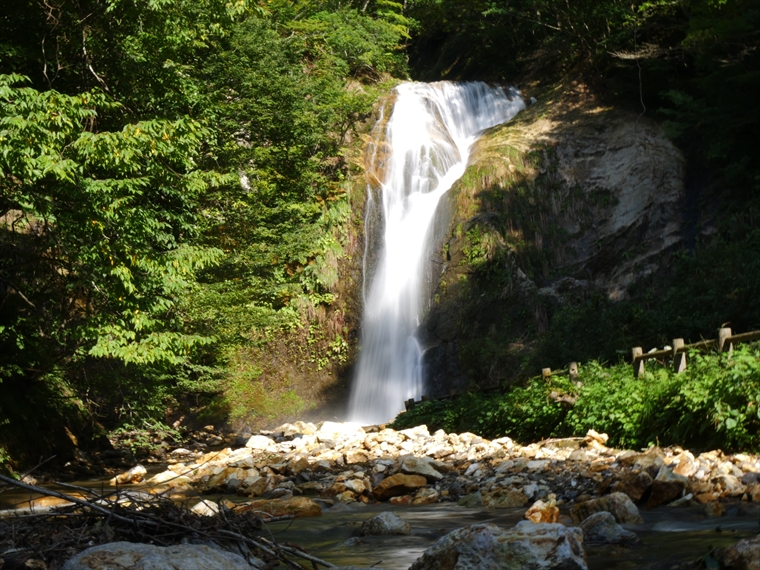
This 23-meter-tall waterfall has an interesting shape, causing its flow to change direction near the top. The whitish rock that you can see in the upper part of the waterfall is a type of volcanic rock called rhyolite, which erupted from a volcano at the bottom of the sea between 23 million and 5.3 million years ago.
The geology in this area is complex, varying over a small area, and there are north-south faults in the area as well. These factors are thought to have contributed to the formation of Akata-ōtaki Waterfall.
In the past, this area was a place for ascetic practices.
As you approach the waterfall, you can see how it slowly polishes the rocks around it, continuously changing its appearance.
 Geopark Sites
 Search by Category