Through our activities, the Mt. Chokai & Tobishima Island Geopark Promotion Council (the managing organization of Mt. Chokai & Tobishima Island Geopark) aims to ensure that not only the current generation but also future generations can live in this region and fulfill their own needs. These activities include protecting and utilizing local resources of geological, natural, and cultural value to protect the Earth and realize sustainable development. To achieve this goal, we promote geopark activities in cooperation with local organizations and residents, under the theme of “The Cycle of Water and Life from the Sea of Japan and the Earth.”
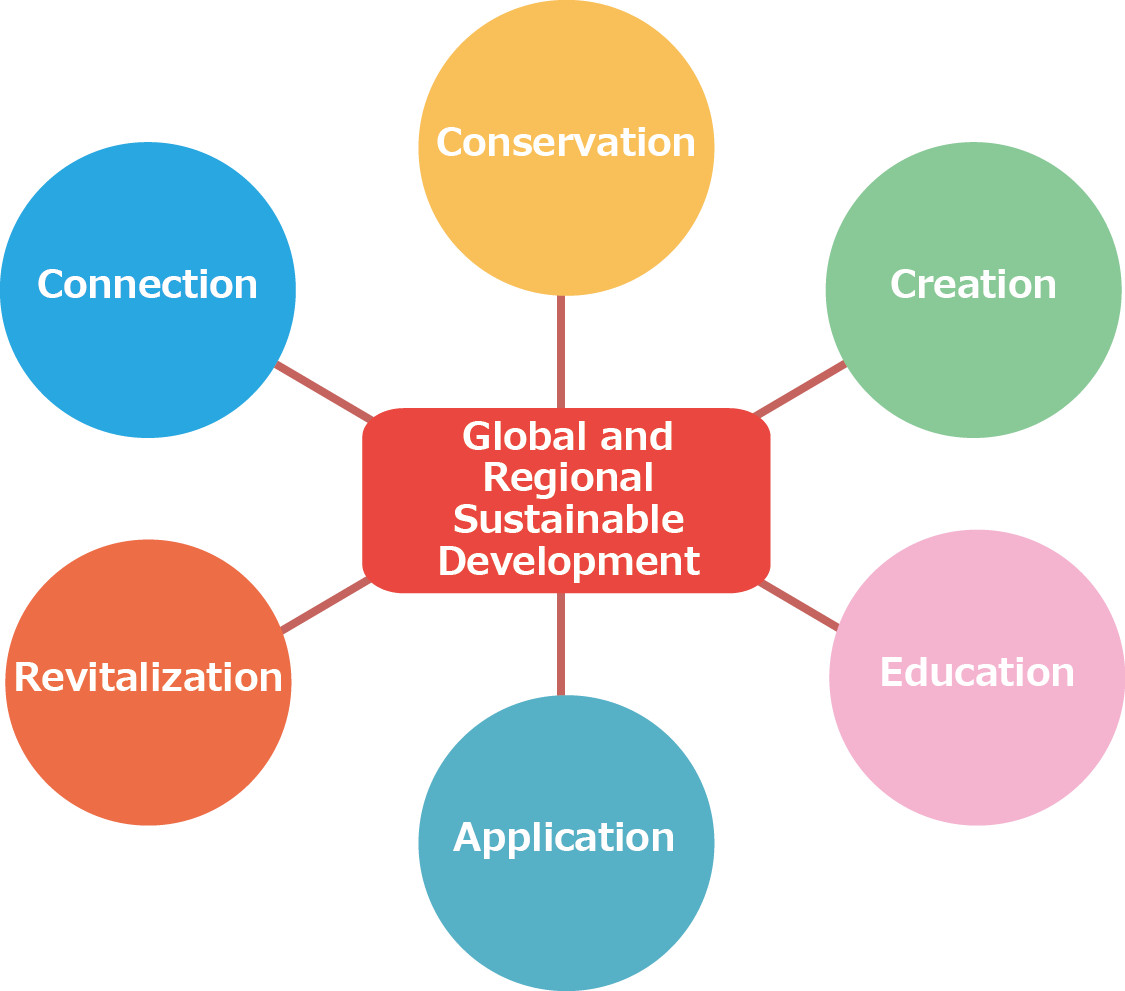
(1)Conservation: Protecting Local and Global Resources
We aim to build a society not just for the current generation but also for future generations to live and fulfill their own needs. To achieve this vision, we cooperate with related organizations under the “Mt. Chokai & Tobishima Island Geopark Basic Guidelines for Protection and Conservation,” recognizing the area’s landscapes and resources of geological, natural, and tangible and intangible cultural value. By listing these landscapes and local resources, and designating them as geopark sites where appropriate, we promote legal protection and/or effective protection through conservation activities.
In addition, we work to reduce the sale of geological materials such as rocks, fossils, and minerals, and actively cooperate with local organizations in action to solve global issues such as climate change.

(2)Creation: Finding New Value through Academic Research
Academic research is essential for the development and quality maintenance of the geopark area. Through academic research, new value can be added to the things around us—stone monuments, buildings, landscapes, the natural environment and the plants and animals that inhabit it, intangible things such as dances and folklore, and tangible things such as the rocks and landforms that make up the land we live on.
In order to continue creating academic value of local resources within the geopark area, as well as to raise the existing value of local resources, we actively cooperate with and promote continued research. We welcome researchers in a variety of fields, including geology and topography as well as ecology, history and culture, disaster reduction, and others.

(3) Education: Fostering Human Resources for Sustainable Development
If residents of a region—of all ages, but especially the younger generation—learn and recognize the value of their region’s local resources, their pride and love for the region will deepen. This in turn leads to a deeper awareness of the need to protect and conserve local resources. As such, education is the basis for fostering human resources who are key players in the sustainable development of society. Additionally, in order to face climate change and the natural disasters that come with it, it is important to have an accurate understanding of the past and present global environment.
To achieve these ideals, the Geopark Promotion Council works together with related organizations to create educational programs for students of each level. We also provide opportunities for residents of all generations to better understand their region and its geological, natural, and tangible and intangible cultural value. All these educational efforts are intended to foster appreciation for the Earth and the region, encouraging local residents to take action for sustainable development into the future.

(4) Application: Using Resources Sustainably for Tourism
Economic activities are essential for the maintenance and development of a society. However, we must avoid creating situations that prioritize economic activities at the expense of the quality and value of local and global resources.
In cooperation with local tourism professionals and organizations involved in agriculture, fisheries, commerce, industry, and cultural activities, we actively promote activities that create a new economy by utilizing local resources for tourism, in a way that does not harm the quality and value of those resources. We also foster human resources who can communicate the value and appeal of local and global resources in an accurate, easy-to-understand, and enjoyable way.

(5) Revitalization: Building a Sustainable Region
In our region, there are people and organizations who have been working for many years to maintain the landscape and environment through cleanup activities, or to pass on local performing arts in the community. There are also people and organizations working to revitalize the local economy through the sustainable use of local resources. We work with these people and organizations to raise public awareness about local resource conservation. Through support for these activities, we work together to increase the number of people taking action for regional development.
Additionally, in order to cope with natural disasters—such as an eruption of the active volcano Mt. Chokai, earthquakes occurring in the Sea of Japan, and severe weather such as typhoons, heavy rains, and heavy snowfall—we actively cooperate with disaster prevention agencies, taking action to raise disaster awareness among local residents.

(6)Connection: Strengthening Partnerships with Other Geoparks
Networking is a key part of the geopark program, connecting geopark regions not only within the same country, but also across borders and around the world. Geoparks are encouraged to participate actively in these networks, sharing experiences and best practices to contribute to solving problems at home and abroad.
Mt. Chokai & Tobishima Island Geopark is a member of the Japanese Geoparks Network (JGN). As a member, we have a duty to help improve the network’s image and reputation. In order to solve issues in our own region that make sustainable development difficult, we also utilize the network to learn from other regions and their actions, applying good practices to improve our own efforts.
In addition, we participate in international activites held by the Global Geoparks Network (GGN) and Asia Pacific Geoparks Network (APGN), actively contributing to solving both regional and global issues.